20 Car Maintenance Tips Every Owner Should Know (Complete Guide for Indian Drivers)
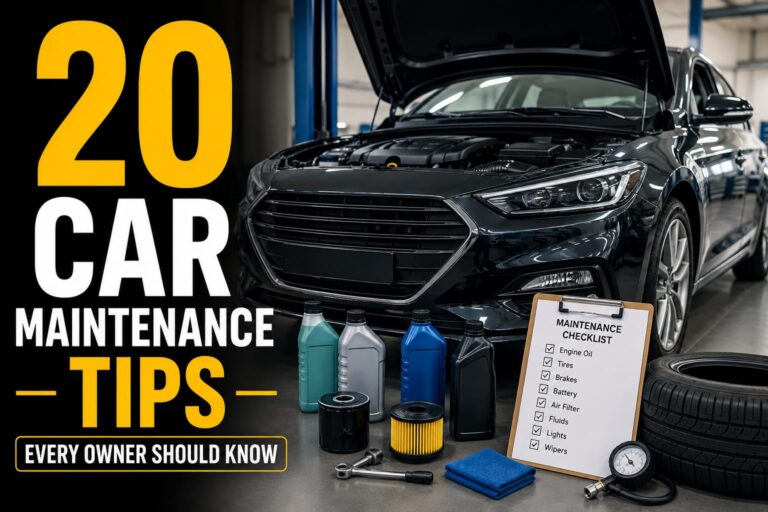
Owning a car is one of the biggest investments for most Indian families. Whether you drive daily for work, run a business, or enjoy weekend road trips, regular maintenance is the key to keeping your vehicle safe, reliable, and fuel-efficient.
Many expensive repairs happen simply because small warning signs are ignored. A simple engine oil change or tyre pressure check can prevent repairs that cost thousands of rupees.
In this comprehensive guide, we’ll cover 20 practical car maintenance tips that every car owner should follow. These tips are suitable for petrol, diesel, CNG, and hybrid vehicles and are especially useful for Indian driving conditions.
1. Change Engine Oil on Time
Engine oil lubricates moving engine parts, reduces friction, and prevents overheating.
Ignoring engine oil changes can cause:
Increased engine wear
Reduced fuel efficiency
Engine overheating
Costly engine damage
Always use the engine oil grade recommended by your vehicle manufacturer and replace the oil filter during every oil change.
Pro Tip: Never delay an oil change even if your car feels normal.
2. Check Engine Oil Level Regularly
Even between scheduled services, check your engine oil every two to four weeks.
Park the car on level ground, let the engine cool, and use the dipstick to verify the oil level.
If the level is low, top up with the correct oil specification.
3. Maintain Proper Tyre Pressure
Incorrect tyre pressure causes:
Lower mileage
Uneven tyre wear
Poor braking
Reduced handling
Check tyre pressure at least twice a month and before long trips.
Don’t forget to inspect the spare wheel.
4. Rotate Tyres Periodically
Front tyres wear faster than rear tyres.
Rotating tyres every 8,000–10,000 km ensures:
Even tyre wear
Better handling
Longer tyre life
Improved safety
5. Inspect Tyre Tread
Tyres with worn tread lose grip, especially during rain.
Replace tyres if:
Tread depth is too low.
Cracks appear on sidewalls.
Bulges develop.
The tyre is more than 5–6 years old, even with good tread.
6. Check Wheel Alignment and Balancing
Poor alignment causes:
Steering pulling to one side
Uneven tyre wear
Reduced mileage
Driver fatigue
Get alignment checked whenever you hit a major pothole or replace tyres.
7. Inspect Brake Pads and Brake Fluid
Brakes are your car’s most important safety system.
Watch for:
Squealing noises
Vibrations
Longer stopping distances
Soft brake pedal
Replace worn brake pads promptly and maintain the correct brake fluid level.
8. Monitor Coolant Level
Coolant prevents engine overheating.
Never open the radiator cap when the engine is hot.
Low coolant may indicate a leak that should be repaired immediately.
9. Replace Air Filters
A dirty air filter reduces engine performance and fuel efficiency.
Replace:
Engine air filter
Cabin air filter
Clean air filters help improve engine breathing and passenger comfort.
10. Keep the Battery Healthy
Battery maintenance includes:
Cleaning terminals
Checking voltage
Tightening connections
Avoiding unnecessary electrical load
Replace weak batteries before they fail unexpectedly.
11. Inspect Wiper Blades
Clear visibility is essential during rain.
Replace wiper blades if they:
Leave streaks
Make noise
Skip across the windshield
Show cracks
12. Top Up Windshield Washer Fluid
Never use plain dirty water.
Use windshield washer fluid to remove dust, insects, and oil effectively.
13. Replace Spark Plugs on Schedule
Healthy spark plugs provide:
Easy starting
Better mileage
Smooth acceleration
Lower emissions
Old spark plugs reduce engine efficiency.
14. Check All Exterior Lights
Inspect:
Headlights
Tail lamps
Brake lights
Fog lamps
Reverse lights
Indicators
Replace faulty bulbs immediately.
15. Listen for Unusual Sounds
Never ignore:
Knocking
Grinding
Clicking
Whining
Metal rubbing
Early diagnosis prevents expensive repairs.
16. Wash Your Car Regularly
Dust, mud, bird droppings, and road salt damage paint.
Wash your vehicle every one to two weeks.
Use automotive shampoo instead of household detergents.
17. Protect the Paint
Apply wax every three to six months.
Benefits include:
UV protection
Better shine
Easier cleaning
Reduced paint fading
18. Keep the Interior Clean
Vacuum carpets regularly.
Clean dashboard surfaces.
Use sunshades to reduce heat damage.
Condition leather seats periodically.
A clean cabin improves driving comfort and resale value.
19. Carry an Emergency Kit
Every vehicle should carry:
First-aid kit
Torch
Jumper cables
Tow rope
Portable tyre inflator
Puncture repair kit
Power bank
Drinking water
Reflective warning triangle
These items can be invaluable during emergencies.
20. Follow the Manufacturer’s Service Schedule
Regular servicing includes:
Fluid replacement
Filter replacement
Brake inspection
Suspension inspection
Computer diagnostics
Belt inspection
Preventive maintenance always costs less than major repairs.
Bonus Tips
Avoid aggressive acceleration.
Do not overload the vehicle.
Warm up the engine gently.
Use genuine spare parts.
Keep fuel above one-quarter of the tank.
Record all service history.
Drive carefully over speed breakers.
Avoid riding the clutch.
Check suspension after rough-road driving.
Keep your insurance and pollution certificate up to date.
Why Preventive Maintenance Matters
Routine maintenance provides several long-term benefits:
Better fuel economy
Increased engine life
Improved driving safety
Higher resale value
Lower repair costs
Greater reliability
Reduced chances of roadside breakdowns
A well-maintained car is not only economical but also safer for you and your family.
Frequently Asked Questions (FAQs)
How often should I service my car?
Most manufacturers recommend servicing every 10,000 km or 12 months, whichever comes first. Always follow your owner’s manual.
How often should I check tyre pressure?
Check tyre pressure at least twice a month and before every long journey.
When should engine oil be replaced?
Replace engine oil according to your manufacturer’s recommended interval or sooner if you drive in heavy traffic or dusty conditions.
Is regular washing important?
Yes. Regular washing protects your car’s paint, prevents rust, and helps preserve its appearance and resale value.
Should I always use genuine spare parts?
Yes. Genuine or high-quality OEM spare parts offer better fit, reliability, durability, and safety than low-quality alternatives.
Conclusion
Your car is a valuable investment, and taking care of it doesn’t have to be difficult. Simple habits like checking tyre pressure, changing engine oil on time, inspecting brakes, and following the recommended service schedule can prevent expensive repairs and keep your vehicle running smoothly for years.
By following these 20 essential maintenance tips, you’ll improve your car’s performance, extend its lifespan, and enjoy safer journeys on every drive.
About SPEED MOTORS
Looking for genuine, high-quality car spare parts? SPEED MOTORS offers reliable parts and expert guidance to help keep your vehicle in top condition. Whether you own a Maruti Suzuki, Mahindra, Hyundai, Tata, Honda, Toyota, or another popular brand, choosing the right parts is essential for long-term performance and safety. Visit SPEED MOTORS for trusted automotive solutions and professional support.